
Why Comfort Shows Became Emotional Survival Tools
The Psychology Behind Rewatching Buffy, Bluey, Gilmore Girls, and The Office When Life Feels Too Heavy
There’s a specific kind of exhaustion that doesn’t make you want silence.
It makes you want familiarity.
Not newness.
Not challenge.
Not “the next big thing.”
You want Stars Hollow.
You want the opening notes of Buffy the Vampire Slayer.
You want Bandit Heeler making another ridiculous noise in Bluey.
You want Michael Scott doing something painfully awkward while you fold laundry you’ve already ignored for three days.
And if you’ve ever wondered why you keep rewatching the same shows over and over again instead of starting something new, the answer is actually much deeper than “because it’s comforting.”
For a lot of us, comfort shows became emotional survival tools long before we realized that’s what they were.
We Don’t Just Watch Comfort Shows. We Regulate Through Them.
There’s a reason people struggling with anxiety, burnout, grief, trauma, depression, loneliness, or emotional overwhelm often return to the exact same shows repeatedly.
Predictability calms the nervous system.
When your real life feels uncertain, emotionally unsafe, chaotic, or isolating, your brain naturally starts searching for patterns it already knows are safe.
You already know how the episode ends.
You already know who says what.
You already know nobody dies in this scene.
You already know the conflict gets resolved.
Your nervous system stops bracing for impact.
And honestly?
In a world where everything feels loud all the time, there’s something deeply healing about already knowing what happens next.
Why Rewatching Shows Isn’t “Lazy” or “Unproductive”
Somewhere along the way, people started acting like rewatching television means you’re avoiding growth.
I actually think the opposite can be true.
Sometimes rewatching a show is how we process growth.
You revisit characters from different stages of your life and suddenly realize you changed.
The show stayed the same.
You didn’t.
That’s part of what makes comfort shows so emotional.

Gilmore Girls Helped Me Understand Myself, And My Daughter
I don’t think I could fully explain my relationship with my daughter without talking about Gilmore Girls.
At different points in my life, I saw different women as “the good guy.”
When I was younger, I understood Rory more.
Then I understood Lorelai.
Then, eventually, I started recognizing the unhealthy patterns in both of them.
That’s what makes the show so interesting as you age.
You stop watching it as a fantasy and start watching it through the lens of lived experience.
You notice emotional immaturity.
Boundary issues.
Codependency disguised as closeness.
Parentification.
Avoidance disguised as humor.
And somehow, instead of ruining the show, it made me love it more.
Because that’s real life.
People can love each other deeply and still hurt each other.
Families can feel warm and emotionally unsafe at the same time.
A home can feel comforting and lonely simultaneously.
For me, Gilmore Girls became more than background noise. It became this strange emotional timestamp between me and my daughter as we grew up together.
There were years where it genuinely felt like the only “safe” family environment I could emotionally step into for a while.
I think a lot of people who feel disconnected from their own families understand exactly what I mean when I say that.

Buffy the Vampire Slayer Was the First Time I Saw Certain Things Out Loud
One of the most ironic things about my life is that my dad introduced me to Buffy the Vampire Slayer.
And if you grew up watching Buffy, you already know it wasn’t just a supernatural teen drama.
For a lot of us, it was one of our first introductions to feminism, chosen family, emotional complexity, queerness, grief, and identity.
It was one of the first shows that quietly taught me that strength and softness could coexist.
That women could be angry.
Smart.
Complicated.
Protective.
Loyal.
Messy.
Powerful.
And honestly? It was also one of my first experiences seeing LGBTQ representation in a way that felt human instead of like a punchline.
Which makes it deeply ironic that the same parent who introduced me to that world was later upset that I became the kind of headstrong, fiercely protective ally that show helped shape.
But that’s the thing about stories.
People underestimate what they plant inside you.
Sometimes a TV show doesn’t just entertain you.
Sometimes it gives language to parts of yourself you didn’t fully understand yet.

Bluey Heals Adults As Much As Kids
Nobody prepared me for the emotional damage Bluey would do as a parent.
And I mean that lovingly.
Because beneath the cute animation and Australian accents is a show quietly teaching emotional regulation, repair, attachment, play, grief, imagination, and parenting in a way most adults never experienced themselves.
A lot of adults aren’t crying during Bluey because they’re emotional about the kids.
They’re emotional because they’re grieving the childhood they didn’t get.
Or realizing, maybe for the first time, what emotionally safe parenting actually looks like.
That’s why so many exhausted parents cling to it.
Not because it’s “just a cartoon.”
Because it models gentleness without pretending parenting is easy.

The Office Is Basically Group Therapy for Burnt Out Adults
I don’t even think most people realize how much The Office functions as emotional decompression.
The stakes are low.
The environment is familiar.
The humor is predictable.
And in a culture where so many people are chronically overwhelmed, emotionally isolated, and burned out, low-stakes familiarity feels safe.
You don’t have to emotionally prepare yourself for The Office.
That matters more than people think it does.
Especially for anxious brains.
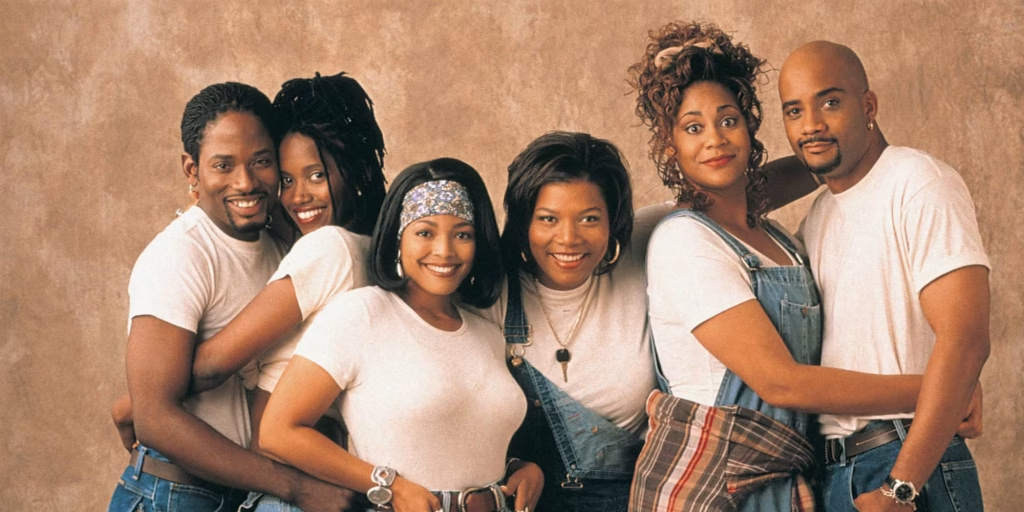
Living Single Deserves To Be In The Comfort Show Conversation Too
Almost every millennial has Friends somewhere on their comfort show list.
And listen, I love Friends too. I really do. I can quote episodes. I still laugh at Chandler. I still think the Thanksgiving episodes are elite comfort television.
But if people are going to talk about Friends, they also need to talk about Living Single.
Because Living Single came first.
A full year before Friends, actually.
And unlike a lot of people who reference it now just to make a cultural point, I was a genuine fan of that show. I remember the apartment. The magazine office. Synclaire’s warmth. Khadijah’s confidence. And Maxine Shaw, attorney at law, being one of the first women I ever saw on television who was brilliant, accomplished, emotionally guarded, hilarious, and completely unwilling to shrink herself for male approval.
I remember my mom telling me I wasn’t allowed to watch it because it was “inappropriate.”
And honestly? Even as a kid, I remember quietly wondering:
Why was she so threatened by me seeing women who didn’t need men to be the badasses they already were? Not only that, but not one joke in that show is more inappropriate than one in Friends.
Because that’s what Living Single gave us.
A founder and CEO running her own magazine.
An attorney who graduated top of her class and never apologized for being smarter than the men around her.
A woman who uprooted her life for family and accidentally found her chosen family, and eventually her husband, in the process.
And Regine, who starts out chasing wealth and status only to slowly evolve into someone capable of building her own success, her own independence, and her own identity outside of being chosen.
The show was funny, emotionally intelligent, warm, stylish, vulnerable, and way ahead of its time.
It understood friendship.
It understood ambition.
It understood loneliness in adulthood.
It understood found family.
And if I’m being honest, I think a lot of us understood the unspoken difference between what made Living Single “inappropriate” while Friends became universally lovable comfort TV.
I’ll let you connect those dots yourself.
side eye
Because comfort shows don’t just become emotional safe places because they’re funny or nostalgic.
Sometimes they become safe because they showed us versions of ourselves (or versions of womanhood, independence, queerness, friendship, or family) that the real world around us was uncomfortable acknowledging out loud yet.
Comfort Shows Create “Emotional Predictability”
One of the hardest parts of anxiety and trauma is hypervigilance.
Your brain starts constantly scanning for danger, conflict, rejection, embarrassment, bad news, emotional unpredictability, or loss.
Comfort shows interrupt that cycle.
Your brain already knows the emotional rhythm.
That predictability lowers cognitive stress and helps your body relax enough to rest, focus, eat, sleep, or simply exist without bracing constantly.
That’s not weakness.
That’s nervous system regulation.
Nostalgia Isn’t About “Going Back.” It’s About Feeling Safe Enough to Feel
People often talk about nostalgia like it’s escapism.
But I think nostalgia is often grief mixed with safety.
You miss who you were.
You miss who you thought people were.
You miss versions of yourself that existed before certain heartbreaks happened.
And sometimes rewatching an old show lets you revisit those emotional spaces safely.
Not because you want to live in the past.
Because you’re trying to reconnect with yourself.
Maybe That’s Why These Shows Matter So Much
I don’t think comfort shows became popular because people suddenly stopped wanting originality.
I think people became emotionally exhausted.
And in a time where so many people feel overstimulated, lonely, politically overwhelmed, financially stressed, emotionally burned out, or disconnected from their communities, familiar stories started functioning like emotional anchors.
A cup of coffee.
A favorite blanket.
A familiar episode.
The same opening theme song you’ve heard a hundred times.
Tiny rituals of safety.
And honestly?
I think there’s something profoundly human about that.

Discover more from Moody Brews Memphis
Subscribe to get the latest posts sent to your email.

You May Also Like

Healing Isn’t Linear, But Your Therapist’s Schedule Is: Navigating Setbacks Between Sessions

Creating a Safe Space: How to Open Conversations About Mental Health with Your Partner
